
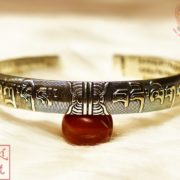


Description
KNIFE BRAND
The Prajñā Sutras is a short Buddhist sutra, but it has a very deep meaning, to break sentient beings' very heavy attachment habits. The sutras are recited by the Temples very often. It can be said that this sutra is very familiar to Buddhists. The Bat Nha Sutta has the following magical meaning:
The Legend of Prajñā la, ie writing notes: Ends, Ends, The three compasses, Ba la rise to the base, Bodhisattva ha. Translation means: Therefore, when he utters the Prajnaparamita mantra, he immediately recites the mantra: Ends, Ends, The three compasses, Ba la rise to the base, Bodhi slapped her.
The theory of the Prajnaparamita Mantra means that one should say the Prajna Paramita Mantra, This allows us to understand that Prajnaparamita contemplation has merit comparable to the merit of the dharani mantra, Of course, the miraculous effect of this practice cannot be thought of as well, So, need to practice the Prajnaparamita mantra.
News notes write, literally immediately said that uncle. But to express that inconceivable spiritual effect, thought should translate that sentence: He immediately responded that only then did he fully reveal the profound meaning hidden in this passage, There is a response immediately. And there is so called spirit, is magical.
Ends, The Chinese translation means degree, The Sanskrit word is originally read as gate, means passing, overcome. The Noble Truth repeated twice means saving oneself and saving others. The three compasses, due to the word paragate, means going to the other shore. Ba la rise to the base, is due to the transliteration of the word parasamgate, meaning to go completely to the other side. Bodhi is enlightenment. Tat Ba Ha is transliterated by the word svana, which means he speaks well. The entire sentence in Pham reads as follows: Gate Gate Pàragate Pàrasamgate Bodhi Svaha. So, The meaning of the whole mantra can be roughly translated as follows: Get through, get over it, Go over to the other shore, Completely crossing the other shore will attain enlightenment. He cleverly said so.
Temporarily translate the meaning of the mantra as above, but his effect is not at all sensible or rational. So, understanding meaning or meaning to you is of no use at all. It is essential to chant mantras, is to be sincere. The more sincere, the more spiritual it is, because the primary use of mantras is to cease thoughts. If contemplation can cease, the body and mind can contemptuous. therefore, Only then will there be an inconceivable feeling of miracles. Particularly about the Prajnaparamita above, The use of salvation is to bring us quickly to the edge of awareness.
Above are the points presented to contribute to understanding the Bat Nha Ba La Tath Kinh. This sutta is due The Blessed One he said that the first thing he said of the Bodhisattva of Bodhisattva at Avalokiteshvara is that the Bodhisattva through profound practice of the Prajñā Mantra that sees the truth of dhammas and attains bodhicitta and The Buddhas of the three generations have relied on the Prajñā Prajñā Dharma to attain liberation and enlightenment, which is the attainment of the supreme result, and advise all Buddhas to quickly cultivate because the Sutra and Prajñā are very wonderful. use the salvage, Help the practitioner quickly come to the edge.
If you are a Buddhist, you should at least know some of the mantras that are often recited every day in the book of Daily Recitation Sutras, including the scriptures as The Amitabha Sutra, Prussian Sutra, The Eight Articles, The Prajnaparamita, Kinh Pharmacist, The prayer of prayer, Kinh Vu Lan, The Jogic Sutras, etc. all of those chanting, Before reciting the confession or dedicating the part, we all recite the Prajñā Sutras and then chant the rebirth mantra.. Why is that? ? Because the Buddha wanted for the Buddhists to understand the spiritual path to liberation, Enlightenment must overcome many obstacles that require reciting the Prajnaparamita Heart Sutra to overcome, get over it, Go over to the other shore, To cross the other shore completely, enlightenment will be attained
Having recited the Prajñā Sutras opens the way to repent of past negative karma and only has enough conditions to dedicate itself to the good saints., Old as the protector, Heavenly gods and for all sentient beings in all the realms.
For those who follow the Pure Land, That is the simplest dharma and suitable for all faculties of many people, often specialize in reciting Buddha's name. Amitabha dharma paths follow the Pure Land practice, Normally, with an elaborate course of Buddhist practice recite the Buddha's chanting rites only, Visualization, Buddha's ceremony and recite Buddha's name, penitent, dedicate, 12 prayer, then Tam self-regulation is the end. Think, In this rite, there should be more chanting part of the Prajñā Tam Sutra and the more complete note of Birth, will be more effective on the path of spiritual practice to come to the aspiration of death as analyzed above.
Of course, on the condition that reciting Buddha's name is enough to believe, prayer, happy, must be critical, loyalty, single-minded disgrace. This elaborate recitation of Buddha's name must reach the level of mindfulness as non-conceptual, Only by following the dharma of non-duality and emptiness in the Heart Sutra can one attain enlightenment. Also reciting but the mind still delusions, rambling thoughts, is contrary to the meaning of Mahayana teachings stated in the Prajñā Sutras, but all sects including Zen Buddhism, Pure Land Tantra or Tantra must also mention. Of course, any practice must attain a calm mind, to mind no, to selflessness and truly changes the person who practices.
Before reaching the point of having transcendent wisdom to step to the other shore, liberation and enlightenment, that is, realizing the Prajnaparamita, of course the Buddhist must attain a change of wisdom and morality., temperament, change the mind, must understand the cause and condition, causal law, to know the human body is rare, life is impermanent, understand the suffering of samsara, Practicing the ten good things that are expressed in everyday life in normal life.
A Buddhist who is still alive means that he is still living a life that cannot be separated from his life from practice to attain attainment., That is to say, we must combine the path and the world as Buddha Emperor Tran Nhan Tong said in the book "Residence in the Land of Dao Phu" and as the World-Honored One taught that the Buddha's dharma does not separate from the world's dharma..
Above are some thoughts that contribute to understanding the profound value and content of religious teachings in the Prajnaparamita Heart Sutra..
(According to Pham Dinh Ngan phatgiao.org)
Reviews
There are no reviews yet.